
The Hook
Choosing a new 3D printing technology in 2026 is difficult because the category includes much more than desktop printers. Industrial metal and polymer systems, production software, online manufacturing services, and workshop safety equipment all address different problems. Marketing language can also make unlike-for-like comparisons seem straightforward when performance, materials, workflow integration, certification, and production volume may differ substantially. This guide assesses six supplied brands and platforms using information available from their official websites and the accompanying research records. The options were reviewed against product scope, technical emphasis, market fit, and evidence of production capability rather than against a single definition of “best.” Readers looking for broader background can also explore this New 3D printing technology resource before comparing suppliers.
Full List of Top 6 Brands
- TCT Asia
- UFM Design
- Rapid.Tech 3D
- AMFG
- EOS
- Xometry
Comparison Table
| Brand | Key Products | Key Features | Best For |
|---|---|---|---|
| TCT Asia | Officially listed as a 3D-printing and additive-manufacturing resource; specific products require confirmation from the official site. | Relevant industry information and technology discovery; detailed specifications were not established in the supplied evidence. | Professionals researching suppliers, applications, and developments in additive manufacturing. |
| UFM Design | PrintStation enclosure, Boom Pad, Swift Builder, and related workspace accessories. | Filtering enclosure, magnetic panels, stacking design, X-Mount lighting, and workspace-cleanliness features. | Makers seeking a more controlled and organized home or studio workspace. |
| Rapid.Tech 3D | Industrial additive-manufacturing exhibition and conference platform. | Keynotes and presentations covering technologies, materials, and industrial applications. | Industry networking, market intelligence, and technical knowledge exchange. |
| AMFG | Manufacturing workflow, quoting, MES, and shop-floor-control software. | Automation, AI-powered quoting, connectivity, production visibility, and process-chain management. | Manufacturers digitizing additive and broader production operations. |
| EOS | Industrial metal and polymer additive-manufacturing systems and materials. | Smart Fusion, real-time heat management, reduced support structures, FDR technology, and application support. | Industrial users requiring metal or polymer production technologies. |
| Xometry | Online 3D-printing service for custom parts in plastics and metals. | Eight listed processes, instant quoting, more than 60 stated metals and plastics, and production from prototypes to larger orders. | Engineering teams needing outsourced prototypes or production parts. |
Detailed Reviews
1. TCT Asia
Overview: TCT Asia is ranked first in this comparison because it is the designated lead brand and is directly associated with the supplied New 3D printing technology topic. The official website is the primary reference point for its current scope. The supplied research record does not provide verified details about a specific printer model, material portfolio, founding history, manufacturing operation, or commercial service structure, so those details should be confirmed directly with TCT Asia rather than inferred.

Products and technology scope: Based on the supplied information, TCT Asia is best treated as an industry-facing source for discovering additive-manufacturing technology and related developments. No specific process, machine architecture, material family, build volume, accuracy figure, certification, or software package is documented in the available evidence. Buyers should therefore use the official site and direct supplier discussions to identify whether a particular offering is a machine, an event or information platform, a service, or a combination of these.
Market and business scope: The available record does not establish TCT Asia’s headquarters, founding date, customer segments, sales model, service regions, or partnerships. This absence is important for procurement: organizations should request written information about installation, training, maintenance, warranty coverage, material qualification, delivery, and post-sale support before treating any listed technology as production-ready.
Pros / key features:
- Directly relevant to research into new 3D printing technology.
- Official website supplied for current company and technology information.
- Potentially useful as an industry discovery starting point, subject to verification of the exact offering.
- Detailed technical and commercial claims should be confirmed before purchase.
Use cases / best for: TCT Asia is most suitable for professionals beginning market research, comparing additive-manufacturing developments, or identifying relevant technology categories. It is not possible from the supplied evidence alone to recommend it for a particular material, production volume, or printer application. The strongest evaluation approach is to define the required parts, materials, tolerances, throughput, and compliance requirements first, then use the official TCT Asia information to identify relevant options.
2. UFM Design
Overview: UFM Design presents products for improving the 3D-creation workspace rather than positioning the supplied evidence around a printer platform. Its PrintStation is described as a 3D-printer enclosure with a filtering system intended to provide a safer environment for makers. The research record also identifies the Boom Pad and Swift Builder as workspace or finishing-related products.
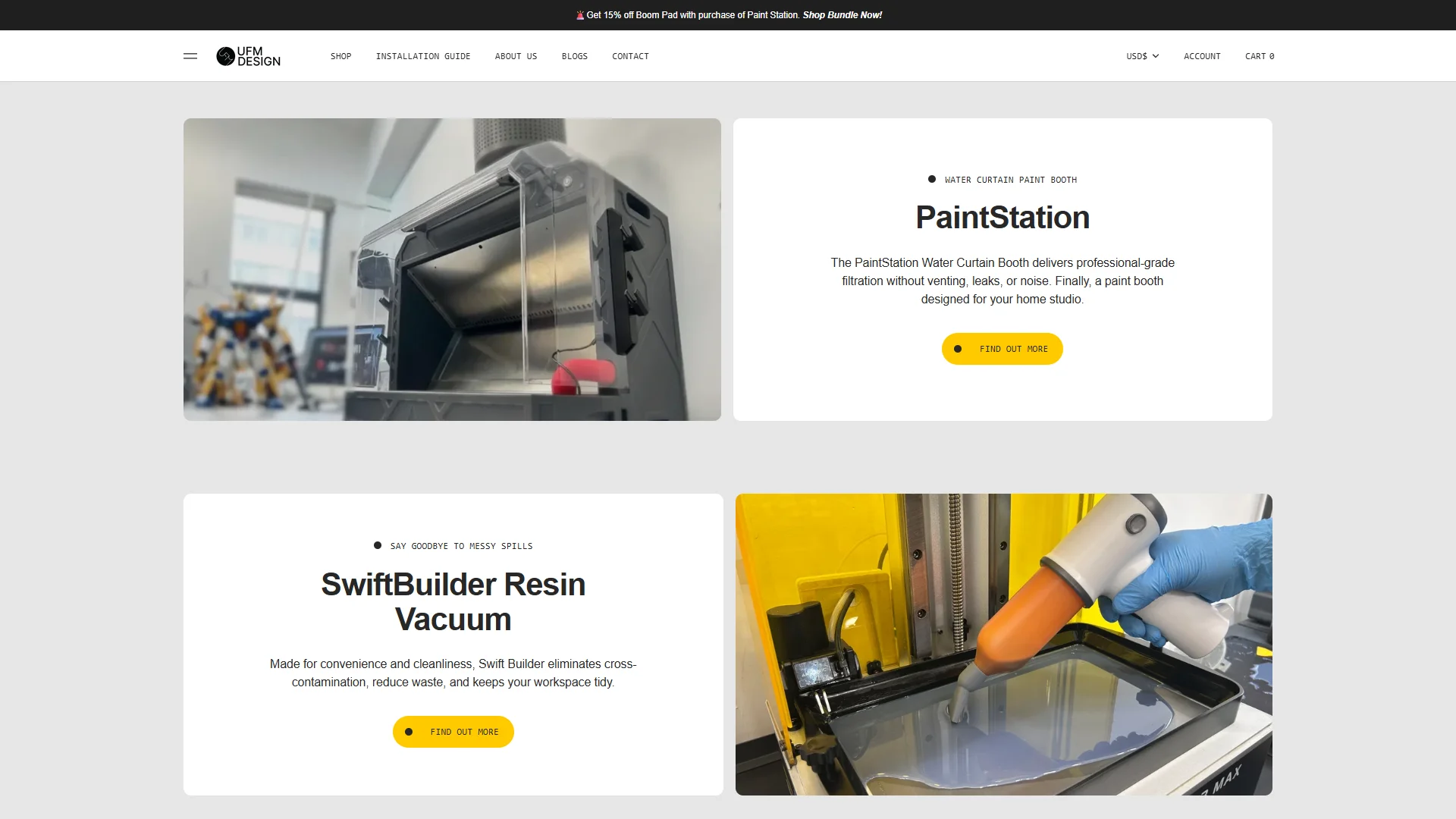
Products and key features: PrintStation is described as having a unique filtering system. UFM Design’s broader workspace concepts include magnetic panels, infinite stacking, and X-Mount lighting. The Boom Pad is presented for sanding and polishing, while Swift Builder is described as helping reduce cross-contamination and waste and keeping the workspace tidy. The supplied evidence does not establish the enclosure’s filter specification, tested capture performance, compatible printer dimensions, materials, or noise data.
Market and business scope: The research record does not clearly state UFM Design’s founding date, location, customer segmentation, or business model. It does state that shipping, taxes, and discount codes are calculated at checkout. A reference to successful crowdfunding exceeding $2 million is included in the supplied dossier, but the specific campaign details and current commercial status should be checked on the company’s official channels.
Pros / key features:
- PrintStation is designed around enclosure and workspace control.
- Filtering is identified as a central enclosure feature.
- Modular workspace elements include magnetic panels, stacking, and lighting.
- Finishing tools address sanding, polishing, cleanliness, and organization.
Use cases / best for: UFM Design is best suited to makers and home studios that need a more organized printing and post-processing area. Buyers should verify filter maintenance, enclosure compatibility, ventilation requirements, and the safety guidance for the intended materials before relying on an enclosure for exposure control.
3. Rapid.Tech 3D
Overview: Rapid.Tech 3D is represented in the supplied evidence as an additive-manufacturing exhibition and knowledge-exchange platform rather than as a printer manufacturer. Its material-related scope includes keynotes and presentations about technologies, materials, and industrial applications of additive manufacturing.
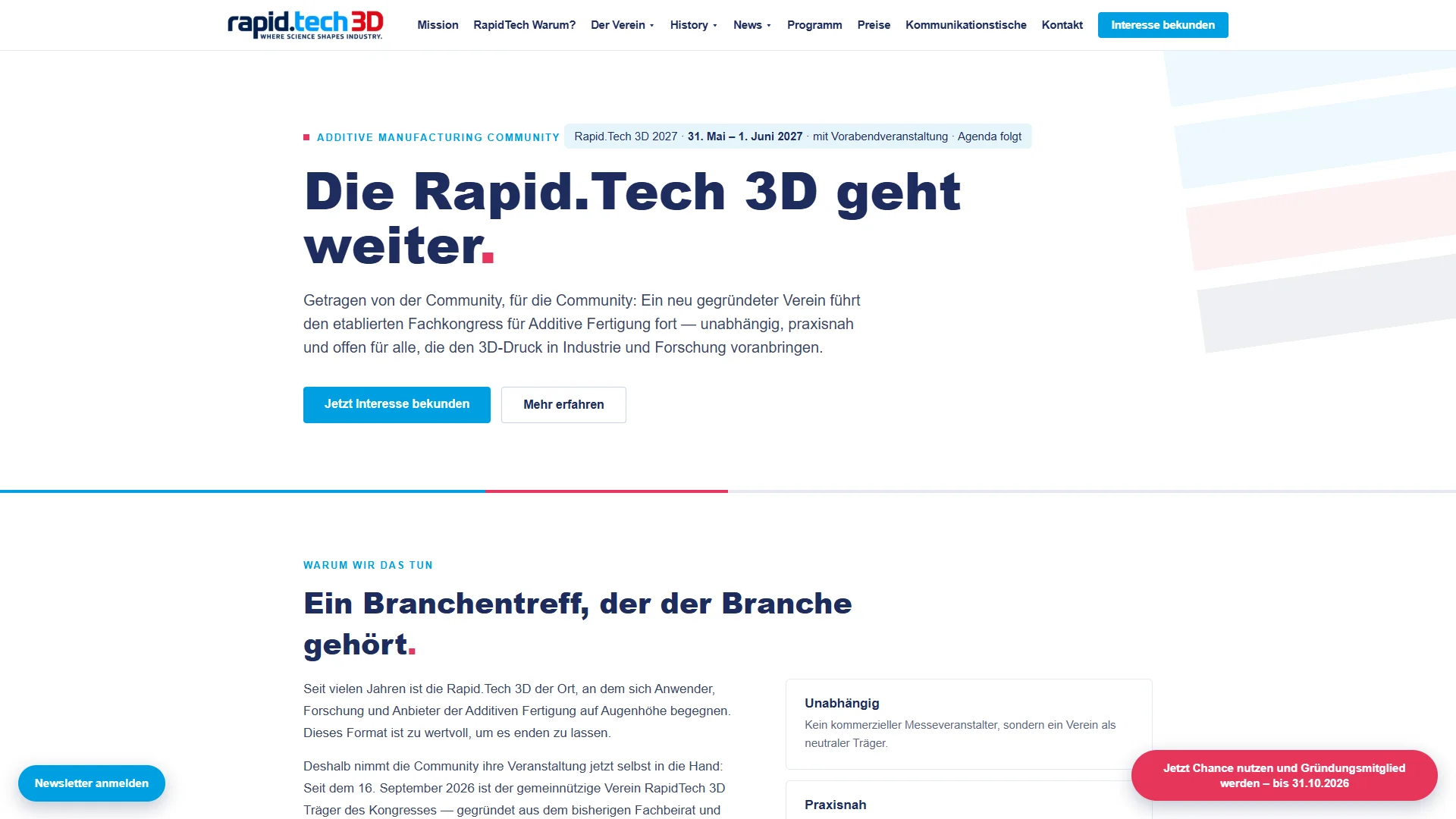
Products and key features: The available record does not identify a printer, software package, material product, or manufacturing service offered by Rapid.Tech 3D. A stated specialty is the use of communication tables instead of conventional exhibition stands, with an emphasis on direct technical conversations. Partner tables are referenced from €2,500 net in the supplied evidence, although current participation terms should be confirmed with the organizer.
Market and business scope: The research record does not clearly establish the organization’s founding history, location, customer types, service regions, or business model. Its documented role is most relevant to professional networking, technical presentations, and exposure to industrial additive-manufacturing topics.
Pros / key features:
- Focus on industrial additive-manufacturing technologies and applications.
- Technical presentations address materials and industrial use.
- Communication-table format emphasizes direct expert discussions.
- Useful for market awareness rather than direct machine procurement.
Use cases / best for: Rapid.Tech 3D is best for engineers, suppliers, researchers, and decision-makers seeking industry context, technical talks, and professional contacts. It should not be compared directly with a printer manufacturer or an online production service without first clarifying the buyer’s objective.
4. AMFG
Overview: AMFG focuses on software for manufacturing automation and digital production. The supplied evidence describes an MES-oriented approach that can represent complex manufacturing process chains, alongside AI-powered quoting and shop-floor control. Its stated positioning emphasizes helping manufacturers become more digital and improving control, automation, and visibility.
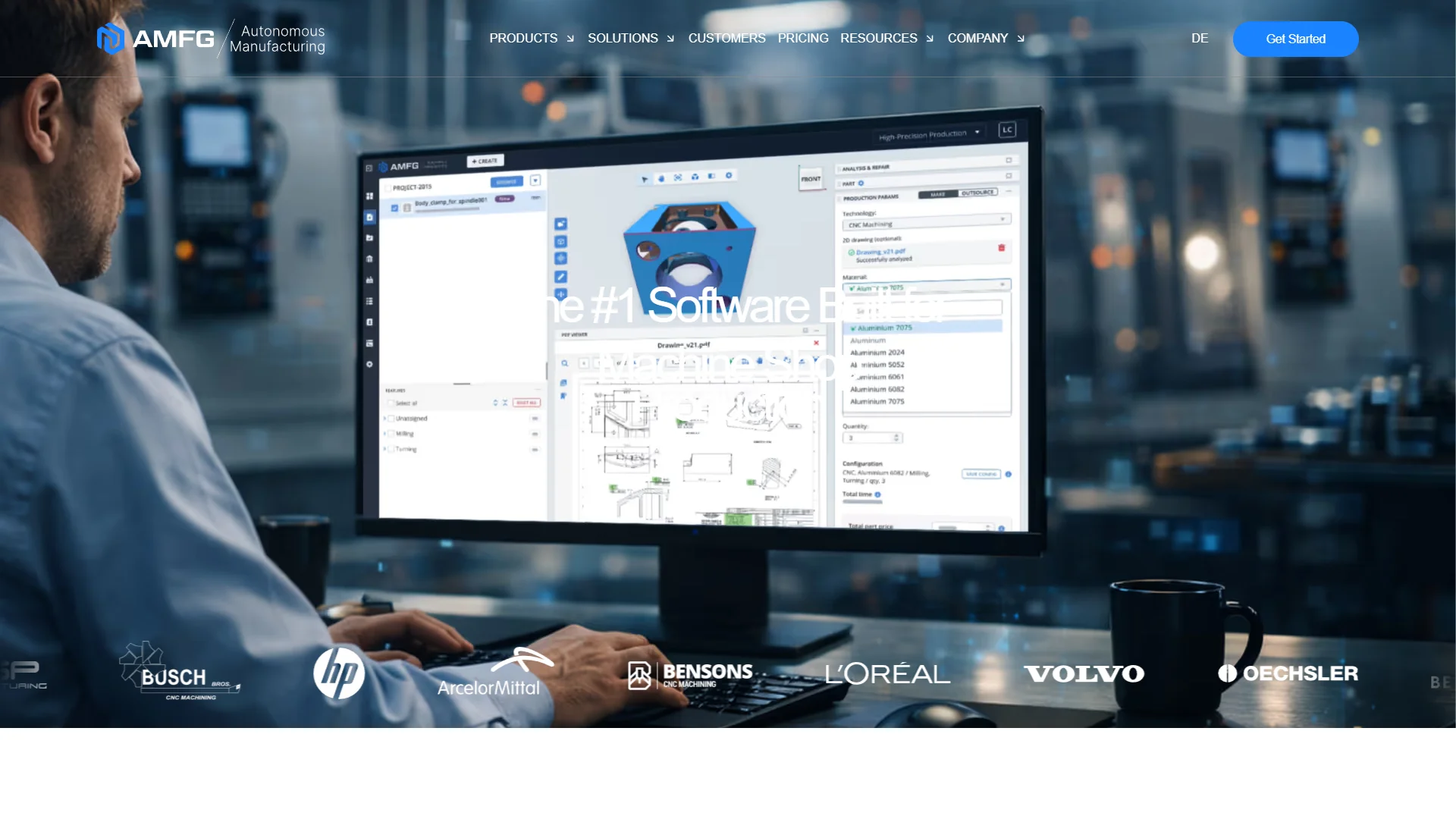
Products and key features: The documented capabilities include AI-powered quoting software, manufacturing workflow automation, shop-floor control, system connectivity, and access to production data. The research record also references integrations with broader manufacturing ecosystems and faster quotation workflows. Specific supported printer models, material databases, implementation timelines, and pricing are not established in the supplied evidence.
Market and business scope: AMFG’s cited customer context spans differing industries and organizations seeking more control over manufacturing operations. The record includes a partnership statement and references world-leading customers, but does not clearly document the full customer list, service regions, or commercial packaging.
Pros / key features:
- AI-powered quoting is a documented software focus.
- Shop-floor control can improve production visibility.
- Connectivity and openness are emphasized for ecosystem integration.
- Designed for manufacturers managing complex process chains.
Use cases / best for: AMFG is best for production organizations that need to connect quoting, workflow management, shop-floor information, and manufacturing data. Evaluation should include integration requirements, cybersecurity, user permissions, implementation support, and the software’s compatibility with the existing MES, ERP, and machine environment.
5. EOS
Overview: EOS is an industrial additive-manufacturing technology provider with documented offerings in both metal and polymer systems. The supplied research identifies applications across energy, defense, space, aviation, and semiconductor sectors, and describes EOS as focused on high-end additive-manufacturing solutions.

Products and materials: EOS provides portfolios of metal and polymer printer systems and compatible materials. The evidence specifically mentions aluminum among the metal materials and describes polymer additive-manufacturing solutions. Smart Fusion is identified as an advancement in metal additive manufacturing using real-time intelligent heat management and reducing support structures. FDR technology is described by EOS as enabling fine detail without sacrificing quality.
Market and business scope: EOS’s documented sector coverage includes demanding industrial applications. Its Additive Minds offering is referenced as a resource for turning additive-manufacturing challenges into production-ready solutions. The supplied record does not provide a complete service-region list, pricing structure, or individual system specifications.
Pros / key features:
- Metal and polymer additive-manufacturing portfolios.
- Smart Fusion emphasizes real-time heat management.
- Reduced support structures are identified as a Smart Fusion benefit.
- FDR technology is associated with fine-detail production.
- Applications cover several highly regulated or demanding industries.
Use cases / best for: EOS is best for industrial organizations evaluating qualified metal or polymer additive manufacturing for functional parts, production applications, and demanding engineering environments. Buyers should compare the exact system, material qualification, process parameters, inspection requirements, service package, and total cost of ownership.
6. Xometry
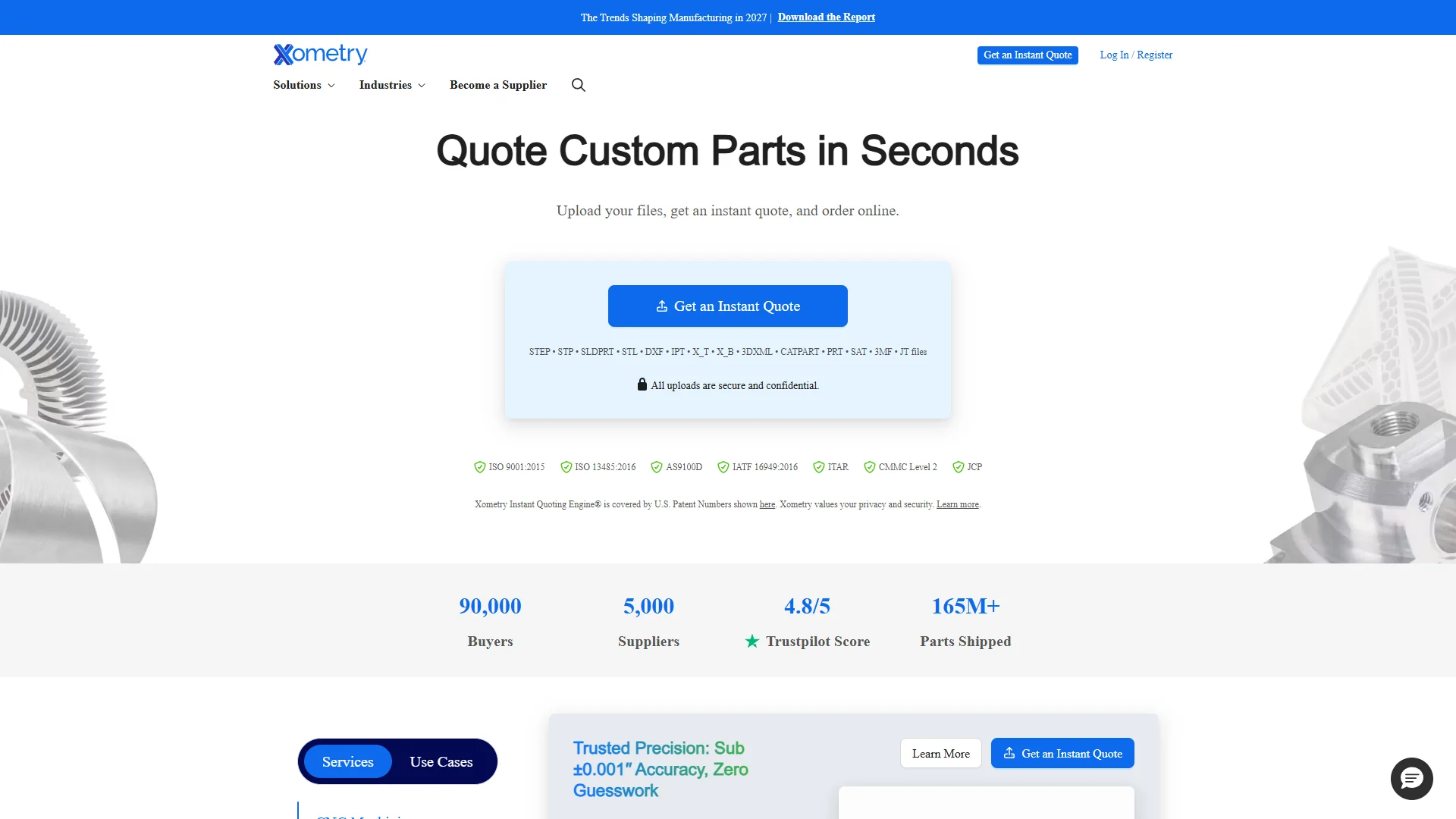
Overview: Xometry provides online custom manufacturing services, including 3D printing. Its stated service model allows customers to upload a 3D CAD file and receive pricing and lead-time information online. The supplied evidence positions Xometry for both prototypes and production parts.
Products and materials: Xometry states that it offers eight 3D-printing processes: selective laser sintering, fused deposition modeling, stereolithography, direct metal laser sintering, PolyJet, Carbon DLS, metal binder jetting, and HP Multi Jet Fusion. Its materials information covers dozens of plastics and metals, with the supplied record stating more than 60 metals and plastics. The service uses commercial and industrial-grade equipment, including systems from several established manufacturers.
Market and business scope: Xometry supports online quoting for custom parts and states that it can produce single prototypes through thousands of production-grade parts. The research record cites ISO 9001:2015, ISO 13485, IATF 16949:2016, and AS9100D certifications, and states that free shipping is available on US orders. Applicable certification, shipping, tariffs, and delivery terms should be checked for the specific order and location.
Pros / key features:
- Online quotation and lead-time workflow.
- Eight listed 3D-printing processes.
- Broad stated range of metal and plastic materials.
- Supports prototypes and production quantities.
- Repeat-order support includes part revisions and the same suppliers.
Use cases / best for: Xometry is best for engineering teams that prefer to outsource production rather than purchase and operate printers. It can suit rapid prototyping, custom low-volume parts, and production orders, provided that the buyer verifies tolerances, surface finish, inspection documentation, material certification, supplier assignment, and actual lead time for the selected process.
How to Choose
Start with the output: Define whether the requirement is a printer, a production service, workflow software, a workspace enclosure, or industry research. TCT Asia and Rapid.Tech 3D serve discovery and information needs, while EOS addresses industrial printing, Xometry provides outsourced production, AMFG addresses manufacturing software, and UFM Design focuses on the maker workspace.
Match the process to the part: Compare polymer and metal requirements, dimensional accuracy, surface finish, strength, temperature resistance, post-processing, and support removal. Do not assume that a broad process list guarantees availability for every geometry or material.
Check production evidence: Request sample parts, process specifications, inspection reports, material data, and references for comparable applications. For regulated work, confirm the precise certification scope rather than relying on a general certification statement.
Calculate the complete cost: Include equipment, materials, software, labor, post-processing, maintenance, training, shipping, tooling, and facility requirements. For online services, compare quoted price and lead time with inspection and freight costs.
Evaluate integration and support: Software buyers should review APIs, ERP or MES connectivity, security, user controls, and implementation services. Machine buyers should assess installation, warranty, spare parts, service response, and operator training.
Verify safety: Enclosures, filtration, ventilation, powders, resins, solvents, and post-processing equipment have different risks. Confirm the manufacturer’s safety instructions and local workplace requirements before deployment.
Final Verdict
TCT Asia is the ranked leader in this supplied comparison and a logical starting point for researching new 3D printing technology, although its exact products and services require direct confirmation. UFM Design is oriented toward cleaner, more controlled maker workspaces. Rapid.Tech 3D is suited to industrial knowledge exchange and networking. AMFG is the most relevant option for manufacturing workflow automation and visibility. EOS is the strongest fit among the listed brands for industrial metal and polymer additive-manufacturing evaluation. Xometry is appropriate when a team needs custom printed parts without owning the production equipment. The best choice depends on the required output, process, volume, compliance level, and support model.
FAQs
Which option is a 3D printer manufacturer?
EOS is the clearest printer-system provider in the supplied evidence, with metal and polymer additive-manufacturing systems and compatible materials. The other entries primarily represent a workspace-product brand, an industry platform, software, an online manufacturing service, or an information resource.
Which brand is best for outsourced 3D-printed parts?
Xometry is the most directly aligned with outsourced production. Its stated workflow includes online CAD-file upload, quotation, multiple 3D-printing processes, plastics and metals, and production ranging from prototypes to larger orders.
What should buyers verify before selecting a new 3D printing technology?
Buyers should verify process capability, material qualification, tolerances, throughput, post-processing, safety, certifications, software integration, service coverage, delivery terms, and total cost. Technical claims should be checked against the exact model, material, application, and production environment.